
UI & UX Design,
Applied Research,
Delphi method,
User Interview,
Quantitative analysis
The AI-Driven Digitalization of Welfare Workflows, Restoring the Human Touch to Geriatric Care
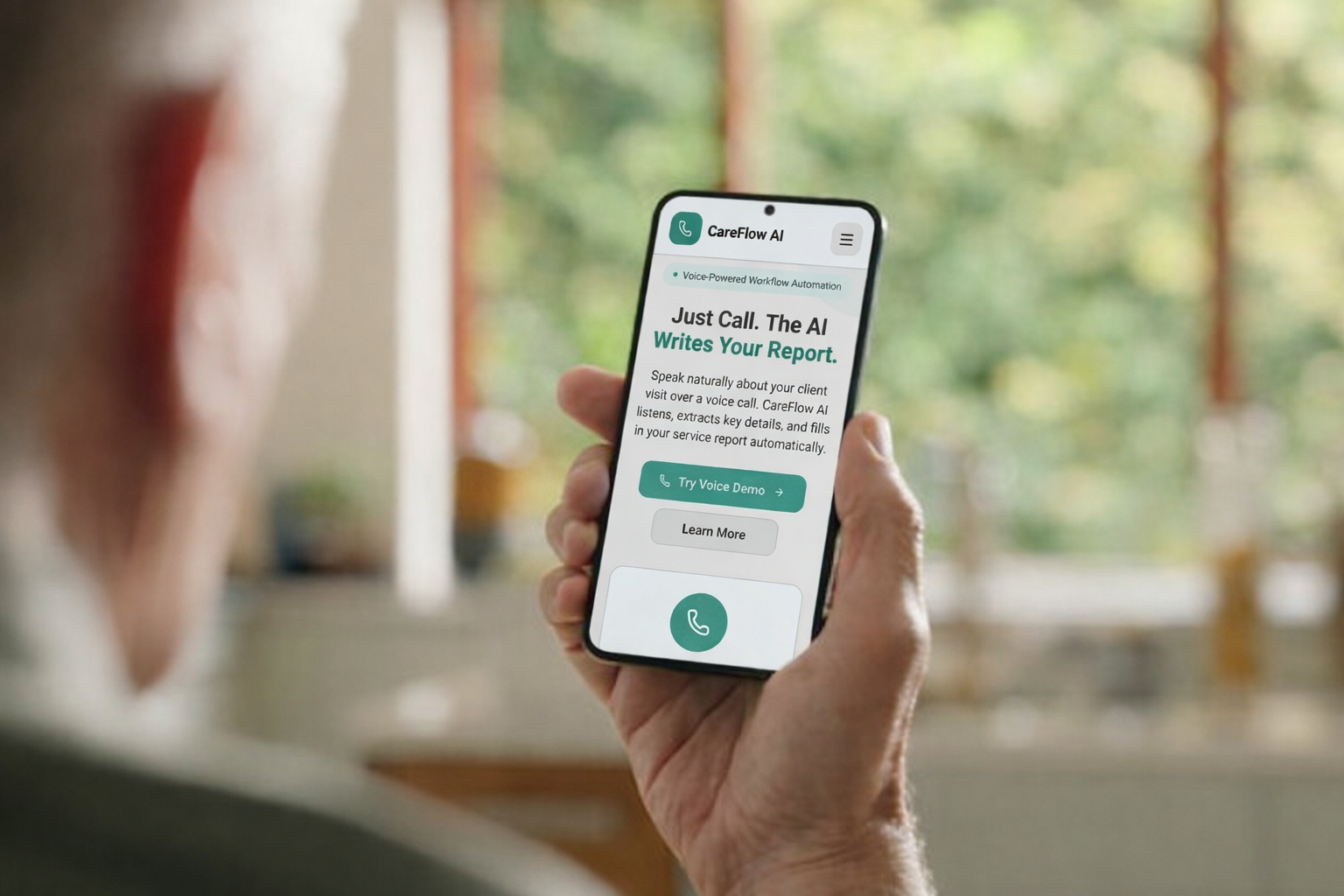
Hong Kong is facing an impending "Silver Wave." Frontline social workers handle staggering caseloads of 40 to 80 families, leading to a 14.7% turnover rate. Through deep user research, we identified a haunting reality: caregivers like our persona, 56-year-old "Mrs. Chan," are trapped in a "Paperwork Prison." Information is scattered across WhatsApp, Google Forms, and physical folders, resulting in administrative overload and severe digital barriers.
As Lead R&D and UX Designer, I executed a rigorous research framework to ground our solution in professional needs:
I translated qualitative findings into specific UX affordances tailored for middle-aged frontline workers:
CareFlow is an AI-native operating system featuring:
We transformed documentation from hours into minutes and enabled the scientific retention of client histories. Ultimately, this project proved that technology in social work should be a "silent partner." Our goal is to rebuild the workflow so caregivers can finally focus on the hands they are holding, rather than the folders they are carrying.

N/A